I. Southeast Asia Expansion: PTT Strengthens Presence in Indonesia
On November 8th, PTT Shipping's NCI service from North China to Indonesia was upgraded and made its maiden voyage from Qingdao. The route operated on a weekly schedule, calling at Qingdao, Shanghai, Nansha, Jakarta, Surabaya, Singapore, and Qingdao again. The service also strengthened its support for refrigerated cargo. CSM's service from China to Singapore and Malaysia was launched from Tianjin in late October. The route operated on a weekly schedule, calling at Tianjin, Qingdao, Xiamen, Singapore, Balasore, Penang, Nansha, and Tianjin.
For Wanhai, starting from late November, a new CI8 route was added, equipped with a 2,800-3,000 TEU vessel, with a 35-day cycle. The ports of call were: Haiphong - Qinzhou - Nansha - Shekou - North Port of Pahang - Mundra - Mumbai - North Port of Pahang - Haiphong. The value of this route lies in connecting Vietnam's Haiphong, China's South China region, Malaysia's Pahang, and the west coast of India's Mundra/Mumbai. Although it does not directly call at Nansha/Shekou/Pahang for its customers, it can facilitate booking through transshipment at these ports, enhancing the options for booking at Indian ports.
However, it should be noted: "More routes" do not mean "always available containers". The near-sea area still heavily relies on small container ships with cranes and has a dense regional transfer operation. If there is congestion at the destination port or if the transfer ship changes its call, the situation of container consolidation and loading restrictions for oversized items, power supply for refrigerated containers, and potential issues with loading will become tight. For the first few voyages of the new route, it is important to pay attention to the actual on-time rate and not only place orders based on the port call chart.
Industry Viewpoint
Linerlytica and other institutions have previously warned that the rates for regional feeder services in Asia are at a high level and the lease terms are prolonged, indicating that the shipowners are optimistic about the continuous flow of cargo within the region. The actions of PIL and Wanhai are essentially creating a high-frequency network of "China North - Southeast Asia - India" rather than simply adding a new route. For shippers, the planning of near-sea orders should shift from "looking for containers at the end of the month" to "checking shipping schedules and transshipment nodes in the next four weeks".
II. Three Ports in the Middle East Implement "Weekly" Berthing
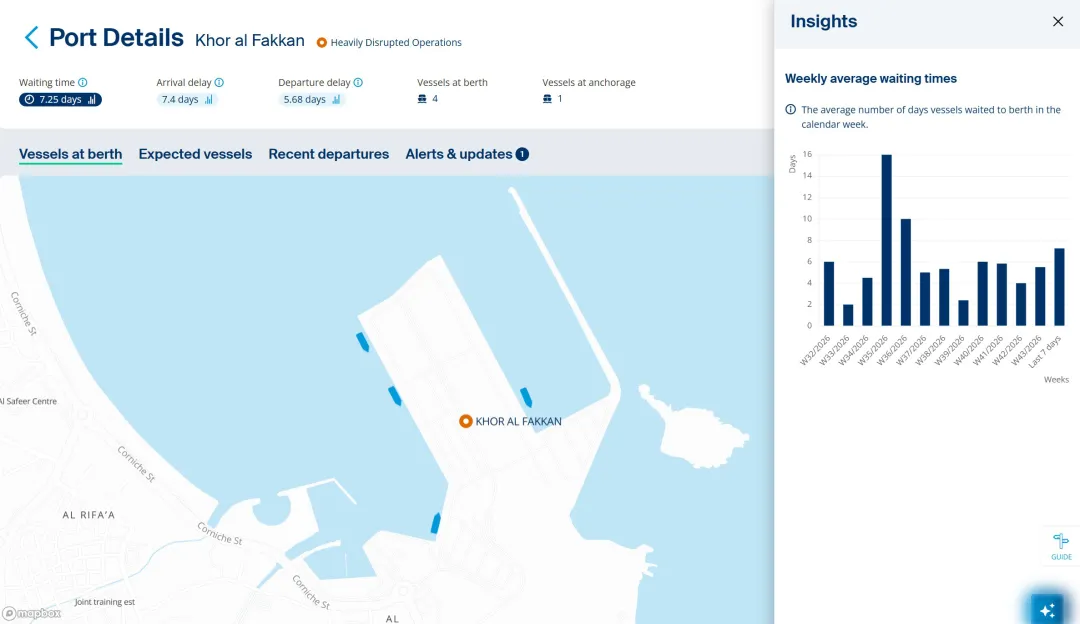 The Middle East is experiencing a dual congestion of "sea-side berthing + land-side transfer". DSV's latest monitoring shows that in the UAE's Khor Fakkan, the average waiting time for berthing is 7.25 days, and the average delay for ships calling at these ports over the past 30 days is 7.4 days and 5.7 days respectively. In Fujairah, container ships have an average waiting time of 8.86 days, and the restrictions on the unloading of foreign goods, dangerous goods, and special equipment are still in effect. In Sharjah, the waiting time for berthing is about 3 days, and the delays for entry and exit are both over 4 days.
Maersk has issued a temporary restriction on October 30th: For ships calling at Khor Fakkan, Fujairah, and some destinations in the upper bay, the cargo booked by customers' managers will be re-arranged on a ticket-by-ticket basis. The cargo in transit may be delayed, and new bookings will be received based on the actual available space. The original bookings will not be automatically extended to the next voyage. Some carriers have begun to reduce the capacity allocation for the three ports, but they have not yet implemented large-scale port changes.
Industry Viewpoint
DSV's judgment in the port dynamics is: Middle East demand remains strong, precautionary stockpiling has increased, and alternative gateways are approaching saturation. The delays will continue to expand in the coming weeks. From the perspective of third-party logistics, the core risk of current Middle East routes is not "high shipping fees", but "uncontrollable arrival time at the warehouse". For production lines and engineering project goods that cannot be interrupted, the dual-port + dual-shipowner contingency plan is more stable than gambling on the fastest route.
III. Additional Fees Will Be Implemented in the Mid- to Late November
Around November 23rd, several key additional fees will be implemented. Shippers cannot only rely on the "shipping fee quotation sheet" to price their goods.
Far East - Mediterranean Direction:
Starting from November 23rd (based on the pricing day of the PCD), Maersk will charge PSS for 24 destinations in the Far East to the Mediterranean - 750 USD for 20-foot containers and 1,500 USD for 40/45-foot containers, covering dry containers, refrigerated containers, open top containers, and tank containers; at the same time, for 20-foot heavy containers with a VGM over 25 tons, an additional 400 USD heavy load surcharge (HWS) will be charged (applicable to contracts, spot, and Maersk Go). The background is that the Freightos Baltic Index shows that the spot price for the Far East-Mediterranean route was $4,375 per FEU on November 3rd, and it has risen by 23% over the past month.
West Africa direction:
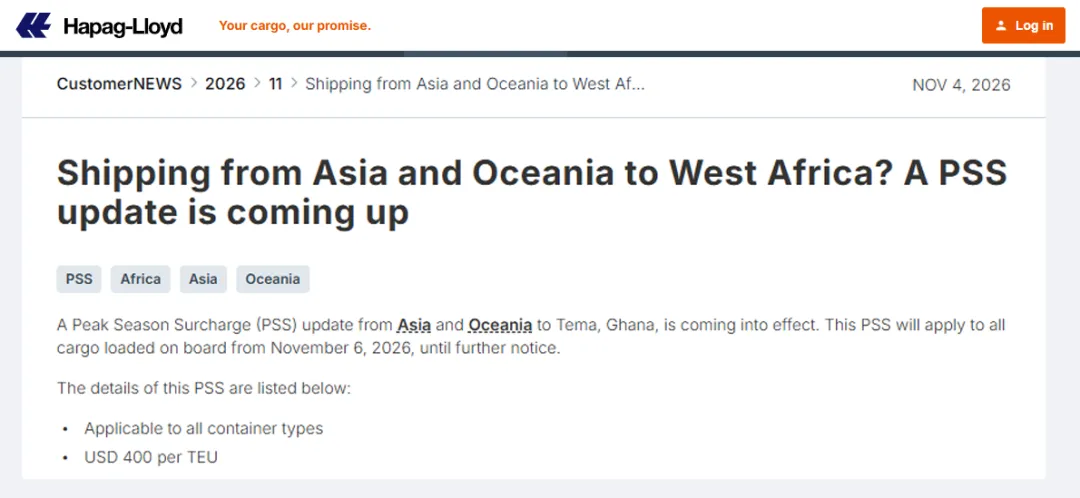
Hapag-Lloyd has a PSS of $400/TEU for Asia and Oceania to the Takoradi Port in Ghana, effective from November 6th. Note that the title says "to West Africa", but the main text only lists Takoradi as the destination port, and it cannot be understood as the entire West Africa region.
East Africa direction:
CMA CGM has a PSS of $400/TEU for China to Dar es Salaam and Mombasa. It is divided into two steps - starting from November 10th for the South China Sea region, and from November 15th for the North China and Central China regions. They must register with the Shanghai Shipping Exchange or incorporate it into the shipping cost.
These are not synonyms for "double the freight", but additional items beyond the shipping cost. The actual cost also includes basic freight rates, terminal fees, war risks, port change fees, and destination port detention fees. For orders scheduled for shipment in mid-November, now they need to recalculate the quotations according to the "new PSS window": those that have confirmed the shipping cost but not the shipment date cannot continue to use the old template; the profit calculation in the sales contract should list PSS and HWS separately, rather than mixing them into "freight".
Industry perspective
The views of institutions and media generally believe that this round of price increase is not a unified increase in prices, but a refined re-pricing based on regions, container types, and departure locations: the Mediterranean looks at the congestion of hub ports and the aftermath of the European labor unrest, Africa looks at the return of empty containers and port turnover, and heavy containers look at the draft and load distribution of ships.
IV. Evergreen returns to the Red Sea, Suez returns to the main route
Starting from mid-November, the Red Sea and Suez routes will undergo a round of "alliance-level" resumption. The northern ports are most concerned about Evergreen Shipping: since January 2024, Evergreen plans to restart the OGRD China-Red Sea service from Qingdao on November 12th, with the "EVER SUPERB" vessel as the first ship, and the port sequence is Qingdao - Shanghai - Ningbo - Shekou - Singapore - Jeddah - Suezna - Aqaba - Pahang - Qingdao. Initially, 4 vessels of 7,000 - 9,000 TEU will be deployed, operating on a biweekly schedule.
Simultaneously, the Premier Alliance (PA Alliance) is also advancing. ONE has confirmed the resumption of the MD1 and MS2 Asian-Mediterranean routes via Suez: the first voyage of the "YM TRUST" vessel on MD1 will arrive in Ningbo on November 10th, covering the East Mediterranean; the first voyage of the "ONE SYNERGY" vessel on MS2 will depart from Qingdao on November 16th, covering the West Mediterranean nodes of Piraeus, Valencia, Barcelona, and Genoa. Yangming is expected to follow in December, while HMM has not participated in this round of resumption.
It is worth emphasizing that this is not a "complete removal of risks". ONE has reserved a safety fallback clause in the announcement: if the situation in the Middle East changes, it can adjust the route or resume the detour at any time. Simon Heaney, the senior manager of container research at Drewry, publicly stated that the speed at which shipping companies return to Suez is "far faster than expected", and the driving factors are not only fuel savings, but also competition and vessel turnover efficiency; Drewry predicts that the traffic volume of Suez can return to 80% of the normal level by February 2027. Alphaliner and Linerlytica judge that the three alliances plus MSC are expected to form a network-level recovery in the first quarter of 2027, and ZIM is currently the only major carrier still holding onto the Cape.
Industry perspective
Simon Heaney of Drewry pointed out that the resumption is driven by both operation and competition, rather than the disappearance of safety risks. Linerytica further adds that over the past four weeks, approximately 3 million TEU of capacity passed through the Suez Canal. Since July, 470,000 TEU equivalent capacity has been released in the direction of Asia-Mediterranean. This means that the price center has medium-term downward pressure, but in the short term, it is offset by surcharges, insurance, and port congestion.
V. Dual Upgrades: Green Digital & Pieceage Management
Recently, the two major core export ports in the north simultaneously underwent "soft infrastructure" upgrades: Qingdao implemented the green and digital corridor in port operations, while Tianjin advanced the bundling and securing of pieceage cargo into a credit governance closed loop.
 Qingdao side:
Shandong Port's Qingdao Port and the Singapore Maritime and Port Authority signed the "Green and Digital Shipping Cooperation Work Plan", advancing the "China-Singapore Green and Digital Shipping Corridor" from a framework consensus to an executable level. The cooperation was divided into three layers: the green fuel end, exploring pilot projects for zero-carbon fuel refueling for ships sailing directly between Qingdao and Singapore, jointly collecting refueling demands, sharing standards and operation procedures; the digital end, leveraging Qingdao Port's "Cloud Port" and Singapore's MPA's OCEANS-X platform to connect vessel dynamic data, improving port transparency and berth and resource allocation efficiency; the research end, involving the China Academy of Water Transport Sciences and the Singapore Maritime Institute, conducting joint verification on alternative fuels and shipping digitalization.
Public data shows that there are already 45 container routes between Shandong Port and Singapore Port, with annual inbound and outbound heavy containers exceeding 400,000 TEU. Data exchange is supported by real cargo volume. In the short term, this event is not directly equivalent to "lowering freight rates", but the medium and long-term value is obvious: the transshipment node between Qingdao and Singapore-Malaysia becomes more visible, and the abnormal response is faster; the certification of low-carbon routes and ESG reports are easier to do; high-efficiency orders can be compressed "invisible waiting".
 Tianjin side:
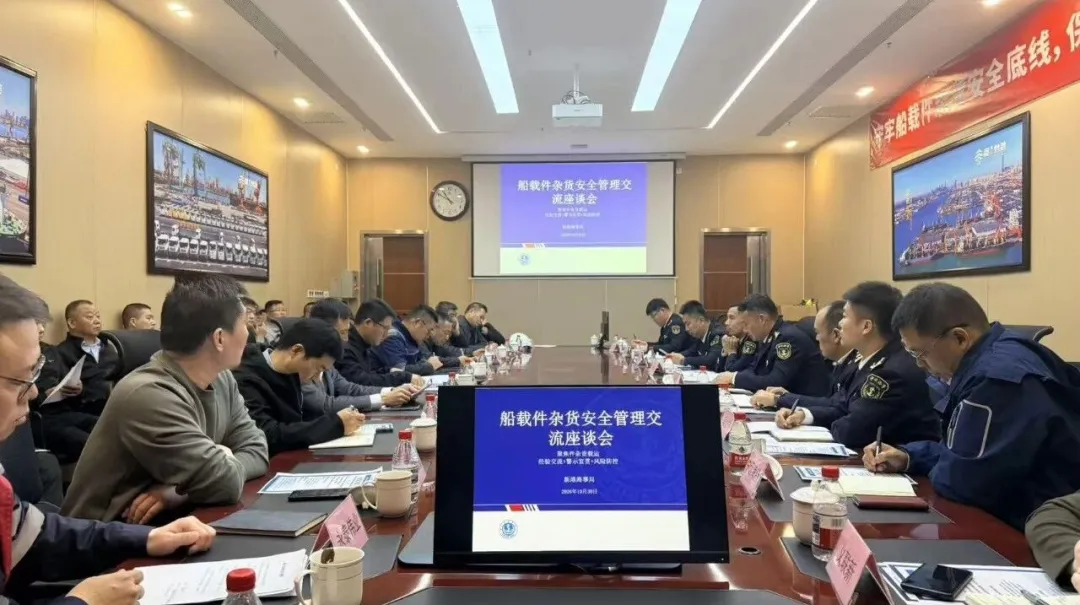
On November 5th, the New Port Maritime Bureau organized nearly 30 ports, shipping companies, ship inspection agencies, equipment manufacturers, mutual guarantee associations, bundling and open flame operation units to hold a pieceage cargo safety meeting, officially launching the credit evaluation mechanism for bundling and securing. The meeting systematically evaluated the "maritime + port" key material transportation and facilitation mechanism, combined with data from the past five years to predict risks such as large pieces on deck, loading bundling, and ship-to-shore cross-operation, disseminated strict requirements for confined spaces and open flame operations, and required the on-site signing of safety commitments by the operation units.
In addition, there is a "five-three" working method: information list, hazard list, supervision list, including all bundling units, vessels, and personnel in the credit file; the berthing - loading - bundling - operation - departure closed loop; more than 20 hazards such as failed bundling and illegal open flame operations have been rectified, and cross-port collaboration is still extending to ports such as Caofeidian in the Beijing-Tianjin-Hebei region. For customers exporting construction machinery, wind power equipment, transformers, steel structures, and large infrastructure components, the compliance boundaries have become clearer: the center diagram, bundling calculation book, open flame permission, and deck load calculation must be pre-positioned at the booking stage, rather than being supplemented with materials at the time of shipment.
Looking at these two matters together, the signal is consistent: Northern ports are shifting from "who has more routes" to "who is more stable, more transparent, and more traceable". Qingdao solves the trust of container and transshipment data, while Tianjin solves the trust of pieceage cargo loading safety.
Industry perspective
Experts from the port and maritime sides all point to "risk prepositioning". China Water Transport News, when interpreting the new corridor, mentioned that data exchange first runs through the "where the ship is" the smallest unit, then expands to berth and customs coordination, essentially making high-end cargo loads obtain predictable transshipment services. At the New Port Maritime Bureau exchange meeting, the shipowner mutual guarantee association emphasized based on cases of ship damage, cargo damage, and fire claims: the accident cost is far greater than the front-end prevention cost, the bundling calculation book and open flame isolation are not just formalities, but evidence chains for claims.
Source of information: ONE announcement excerpt, Evergreen Shipping schedule information, Drewry and Alphaliner market analysis, Kuehne+Nagel port dynamics in early November, Maersk customer announcement on October 30th, comprehensive compilation by Zhejiang Chamber of Commerce and Industry, Maersk notice on November 4th, Hapag-Lloyd PSS notice, CMA CGM China-East Africa PSS notice, Wanhai Shipping CI8 new route announcement, Pingtan Shipping NCI/CSM service adjustment, Shandong Port Qingdao Port and Singapore Maritime and Port Authority, Tianjin New Port Maritime Bureau exchange meeting on cargo safety management on board vessels.
The Boxster International official account is only used for industry information dissemination and sharing. Data and policies are based on official announcements, shipping company notifications, exchange indices, and real-time port updates. This article is only for shippers' decision-making reference and does not constitute a price lock commitment. If there is any infringement, please contact us, and we will verify and delete it immediately.



 中文
 English