01. How many "gates" are there at Manila Port?
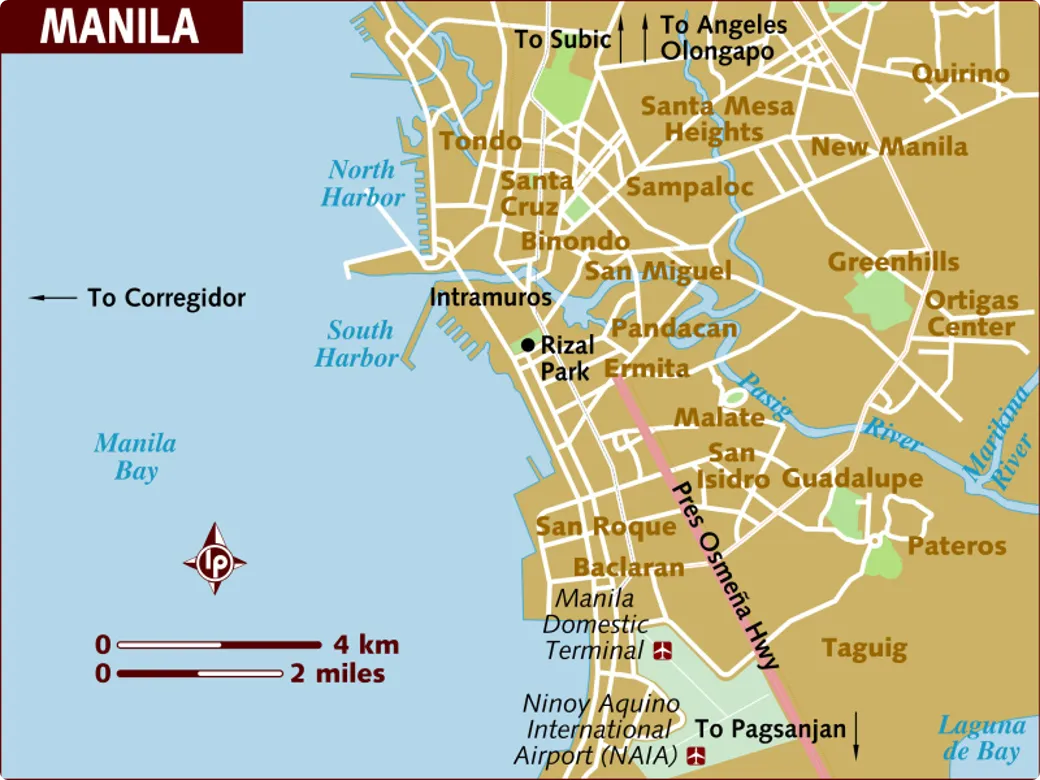
Many people think that "Manila Port" is just a dock: once the ship docks, the container is picked up, and customs clearance is completed, everything is done. But those who have actually crossed the Philippine line know that Manila Port is not "one port", but three sets of logic: North Port, South Port, and International Container Terminal (MICT).
Location advantage:
·The entrance of Manila Bay is 19 kilometers wide and a natural deep-water harbor
·Adjacent to the center of Manila, the capital city, with superior transportation and gathering conditions
·Only 8 kilometers away from the international airport, convenient sea air transportation
·Cross island ferry terminal radiates over 7000 islands in the Philippines
02. Manila Port: The 'Economic Throat' of the Philippines
The Port of Manila (PHMAN) is located in the southwest of Luzon Island and on the east side of Manila Bay. The mouth of the Port of Manila divides the port area into two halves, north and south. It is the largest and busiest international gateway in the Philippines, responsible for about 70% -80% of the country's container imports for a long time, and is also the first destination port for shipments from China to the Philippines.
Manila North Port (the heart of internal logistics in the Philippines)
▍ Operator: Manila North Harbor Port Corporation (ICTSI series)
▍ Area: Approximately 53-61 hectares, with 2/4/6/8/10/12/14 piers
▍ Water depth: relatively shallow, many berths are 4.5-6.0m, and high draft foreign trade container ships do not have priority to stop here
▍ Main business: Philippine Islands domestic trade, roll on/roll off passenger ships, coastal bulk cargo, domestic containers
Manila South Port (Southwest Manila, 5 piers)
▍ Operator: Asian Terminal Inc. (ATI), licensed until 2038
▍ Area: Approximately 80 hectares, with piers 3/5/9/13/15
▍ Water depth: Some berths are over 9.4 meters deep, which is more accessible than Beigang Port
▍ Main business: International containers, general cargo, steel/machinery/packaging goods, roll on/roll off. By 2025, the containers in Nangang will be approximately 1.463 million TEUs, an increase of 13% year-on-year
MICT (the main force hidden between the North and South ports)
▍ ICTSI Operations, Core of Philippine Foreign Trade Containers
▍ Annual processing capacity of 3 million TEUs, expanding to 3.5-3.7 million TEUs
▍ China South/East China direct shipping, foreign trade heavy container, e-commerce goods, clothing and consumer goods main unloading points
Manila is not a 'commodity specific port', but a typical consumer capital port.
▍ Import:
Steel/hardware, electromechanical equipment, building materials, chemicals, plastic particles, food packaging, daily necessities, e-commerce goods.
▍ Export:
Clothing, handicrafts, partially processed parts, agricultural products, coconut products, fruits, semiconductor/electronic components.
▍ Transfer:
The feeder line within the Philippine archipelago is fed to (North Port/South Port Cebu/Davao/Batangas/Subic).
03. Limited draft but high liner density
Manila is an estuary/nearshore port, not a super deepwater giant port like Rotterdam or Singapore.
Mainstream docking vessel types:
Branches/near ocean vessels within the area of 1000-2500TEU; 3000-5000 TEU Southeast Asian mainline ships are also considered large ships; 8000+TEU ocean going ships generally do not use Manila as their core port of call.
The capacity of the terminal depends not only on the yard and trailer, but also on the quay crane: MICT and Nangang both have modern quay cranes and yards, but the heavy truck restrictions and yard saturation in Manila city will directly double the "theoretical throughput capacity".
04. Relevant shipping company capabilities
(1) Sinolines/SNL
Sinotrans is not a "booking agent", but a Philippine route operator with its own ships, routes, and ports.
① Self operated fleet, three main shipping routes
▍ It's not about renting cabin space, but about the shipowner and carrier signing long-term contracts with major shipping companies, with priority given to releasing cabins during peak seasons;
▍ Main departure ports in China → Manila South Port/North Port → Return/branch line replenishment → Return to China, fixed schedule closed loop, self operated lines also open during peak season.
② Direct flight without detours, fast+accurate+no container dumping
▍ Northern port direct flight network; EBommerce online booking platform, real-time push of bill of lading nodes, transparent tracking of the entire process of arrival, berthing, unloading, container loading and unloading;
▍ Steel coil heavy containers go to Nangang, e-commerce goes to Beigang, and large/project goods go to Subic; Real time tracking of congestion dynamics at Manila Port, coordinating in advance for extended container free periods, and developing contingency plans for port hopping in Subic/Batangas.
③ Local company, customs clearance advantages
▍ Sinotrans Container Lines (Philippines), Inc. (SNLPH), located in Intramuros, Manila (adjacent to customs and ports), with offices in Manila and Subic;
Business coverage: shipping agency, container management, documentation, import and export sales, ship operations, closely related to port terminals, customs, and quarantine departments;
▍ Our own customs clearance team and broker. Sinotrans Philippines handles its own shipping agency and customs clearance coordination.
▍ Documents are pre reviewed before the ship departs and submitted to the customs system 3 days before arrival. It has its own container management and can coordinate demurrage/demurrage fee reductions.
Outbound shipping may not necessarily be the cheapest, but "urgent goods, first order, samples, machine parts, overseas warehouse replenishment" are often the most worry free.
(2) COSCO Shipping
① Strong Southeast Asian trunk network
The supply of cabin space between China and the Philippines is stable, suitable for monthly customers, full container loads, and long-term contract prices;
② Multi agent system for customs clearance
Not as close as the "own company" of COSCO Shipping, but the shipping schedule credit and destination port resources are very hard
COSCO Shipping focuses on "speed and stability" while COSCO Shipping focuses on "quantity and price".
(3) Other mainstream shipping companies
SITC (Haifeng): Strong between China, Japan, and the Philippines, friendly to LCL/LCL shipments
Wan Hai: High density of air routes between Taiwan and the Philippines
MAERSK/ONE/HMM: Ocean Main Line+Philippine Branch Line
CMA CGM/PIL: Southeast Asia route stable
MSC: Large market position, but significant fluctuations in destination port operations
Pain points:
container dumping during peak season, waiting for berthing, uncontrollable destination port agents, slow customs clearance, and long container pickup and waiting times.
05. Cashiers in the China Philippines Industrial Chain
The prosperity of Manila Port is rooted in the continuously growing infrastructure demand and huge consumer market in the Philippines. The geopolitical game in the South China Sea will bring temporary uncertainty, but the complementarity of economic and trade determines the long-term positive trend of bilateral trade.
The main port of Manila continues to be under pressure, and the trend of diversion between Batangas and Subic is evident. Only by mastering ship rights, customs clearance rights, and local delivery resources can we adapt to market changes.
Disclaimer: This article is a science popularization observation of the industry, sourced from public policies, industry reports, and authoritative media reports, aimed at sharing industry information. The views expressed in the article do not represent the position of the institution and do not constitute any professional guidance or decision-making advice. Please indicate the source and this statement when reprinting. The content is subject to dynamic changes in the policy environment, and readers are advised to make independent judgments.



 中文
 English